There comes a time in everyone’s life when you have to make important decisions. What do I believe in? Who do I want to be? What and who will I stand up for? There has been a lot going on in the world lately and a lot of it, sadly, is pretty awful. While people are learning pretty quickly that elections have very real and long-lasting consequences, what is critical to overcome the next 4-years of this fascist regime isn’t just that we are taking to the streets to make our voices heard but we are willing to disrupt society at every turn to make sure that people on the other side of the proverbial political coin know we will not go gently into that good night.
I’ve been questioning G-d a lot lately; wondering what has happened to that shining “City on a hill” that John Winthrop called for in his 1630 sermon “A Model of Christian Charity.” The idea that the United States of America is “G-d’s country” due to the American exceptionalism present but not only the rich bounty of land and resources many would soon land upon but also the potentiality that America represented in a world full of monarchs.
Many Presidents have often recited the very same idea to the American populous. From John F. Kennedy to Ronald Reagan, America, although diverse and full of various communities from all walks of life, always presented a rich idea that we would be a beacon for prosperity, freedom, and dreamers. For myself (and many others I’m sure), that idea was called into question on November 8, 2016. We had come so far in the struggle for and the potential achievement of the “American Experiment” to fall before we got to the top and, as we have all felt since then, hit every jagged rock on our journey back down to the bottom. However, what we need to remember is that we’re not anywhere close to the bottom yet; all the symbolic bruises and scars we each have will only continue to grow as we keep tumbling down the rabbit hole.
Although the hits keep coming I refuse to let them get me down. I refuse to sit back and watch the country and communities I love be attacked by a tyrant and his cronies looking to cash in on people’s lives.
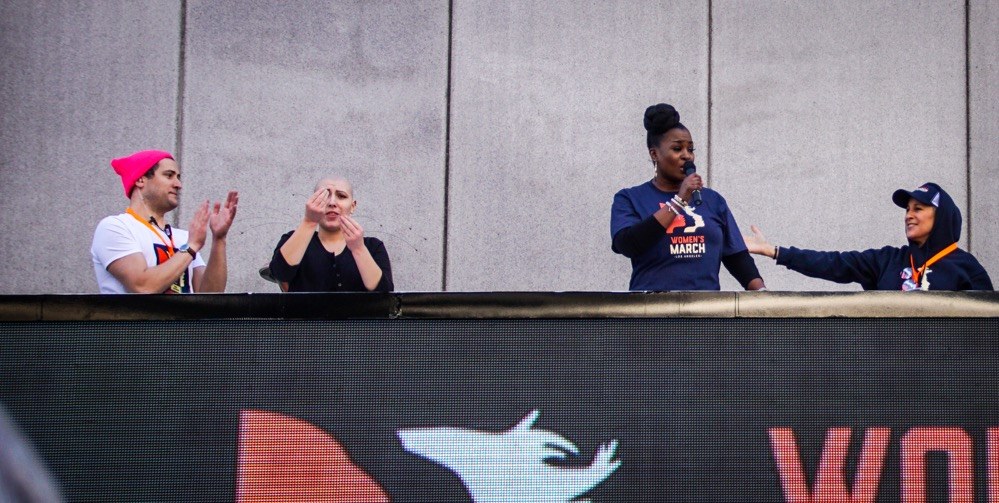
On January 21, 2017, I saw the resistance rise. For me, the Women’s March was more than just 750,000 people from all walks of life taking part in a communal action across the world, it was an accumulation of what is not only possible but also the hope and dream of what is still to come.
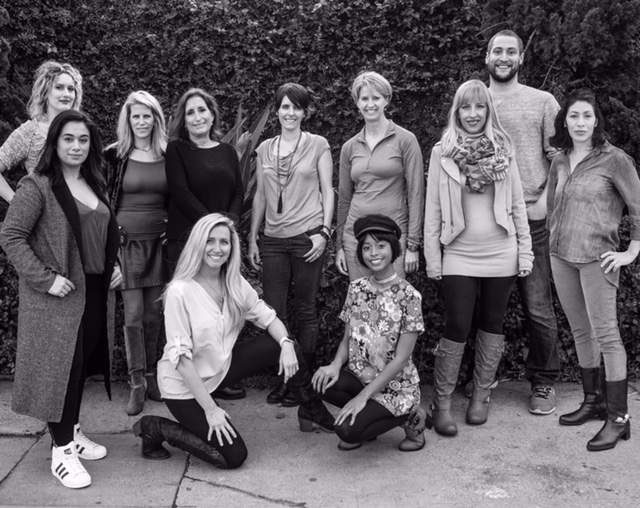
What a lot of people do not know is that while I too, was a part of the crowd, I was also behind the scenes working on the march here in Los Angeles. I was fortunate enough to be 1 of the 13 co-organizers of the march which consisted of a group of women I now call my heroes. Although I do not think that I’ll ever be able to put into words what the march or being part of its organization means to me, the one thing I do know for sure, now, more than ever, is that we are always stronger together.
At the march, we went from “I” to “We.” We became part of something that we will never be able to understand. If that isn’t G-d, I do not know what else it would be. While November 8 had me questioning my faith, January 21 brought it back full force.
The night before the march, I was with three of my closest friends. We laughed, we cried, we shared in the love that we have for this country and most importantly, the love we have for each other. Falling asleep that night, the following quote kept me awake at night and I didn’t understand why until I got home after the march. The quote is:
The Devil whispered in my ear,
“You’re not strong enough to withstand the storm.”
Today I whispered in the Devil’s ear,
“I am the storm.”
“You’re not strong enough to withstand the storm.”
Today I whispered in the Devil’s ear,
“I am the storm.”
While I believe the quote is perfect as it is, the only thing that I’d change is that on January 21, “I” didn’t just whisper in the Devil’s ear, “We” did.
Welcome to the resistance, my friends. The march happened. We all went home changed and more awake than ever before. Now, the only remaining question I have for you is: what’s next?
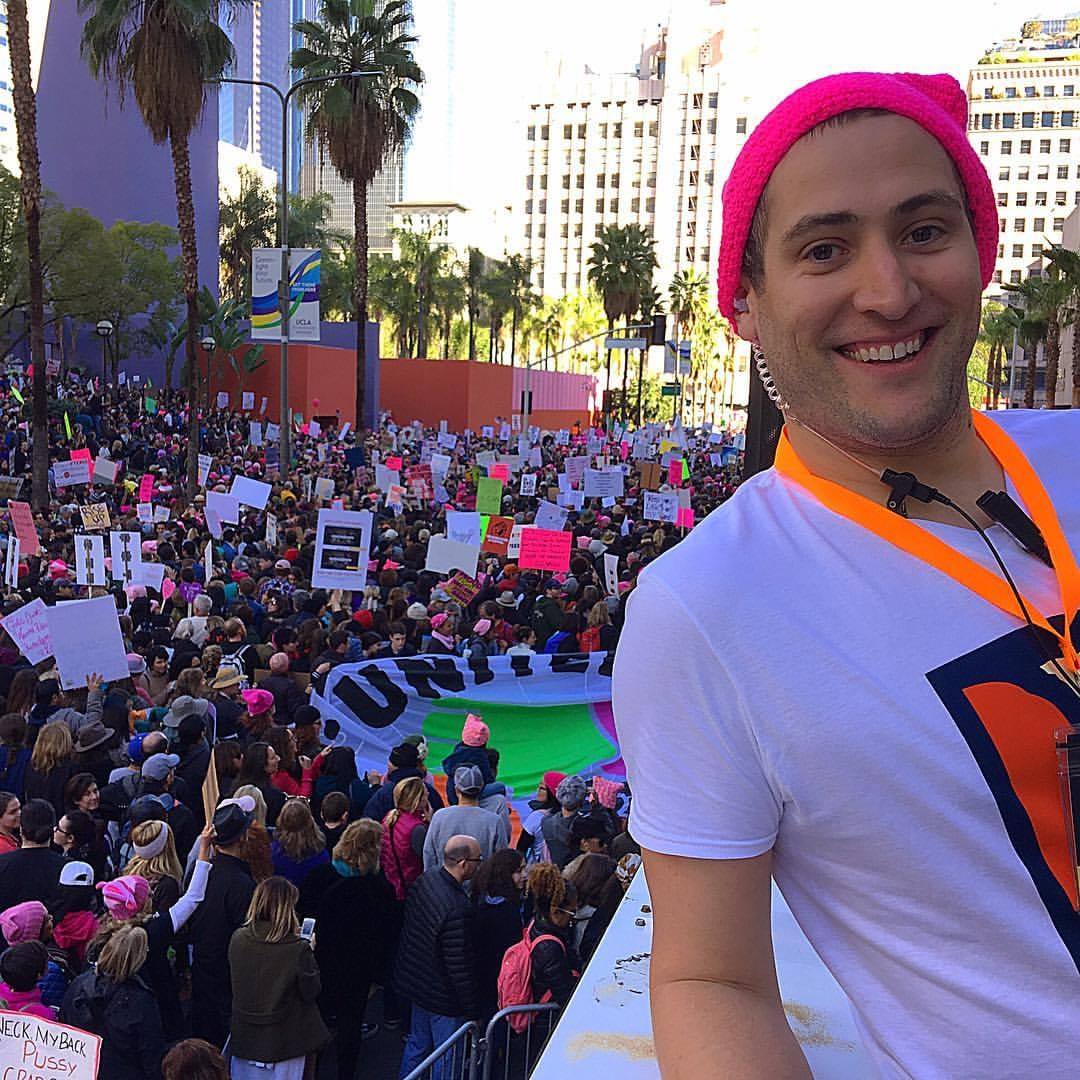
John is a Ph.D. Candidate in American Religious History at Claremont Graduate University and holds an MA in Women’s Studies in Religion; an MA in Applied Women’s Studies; and a BA in English and Women’s Studies. His areas of focus are women’s, gender, and sexuality studies, LGBT history, American religious history, and 20th and 19th-century American women’s history. John is currently the Community Events Technician for the City of West Hollywood where he works on community events related to women, gender, sexuality, and human rights issues.


